
Ngataki: The little boat out and about promoting Auckland’s Wooden Boat Festival
This story featured in Boating New Zealand in November 2025.
Ngataki might be one of New Zealand’s most famous wooden boats. She’s small, capable and – some say – of questionable aesthetic.
And now she has become a poster child for the Auckland Wooden Boat Festival, which is being held for a second time this 13 to 15 March as part of Moana Auckland, New Zealand’s Ocean Festival.
Built by a young Johnny Wray in his garden in depression-era Auckland, the boat became the subject of the book ‘The South Sea Vagabonds’ where Johnny, with a gentle and self-effacing sense of humour, chronicles the story of building Ngataki (which means abode of the elite) with materials – including kauri logs, sails and rigging – that he finds and hauls home from locations throughout the Hauraki Gulf and his voyages across the South Pacific.
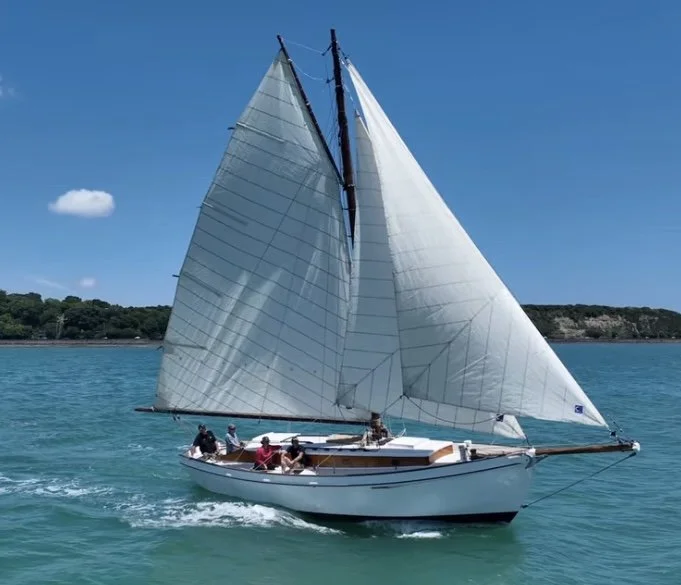
Today the 34ft Ngataki, fully preserved by the Tino Rawa Trust, is 94 years old – but age hasn’t stopped her putting in the miles to champion the Auckland Wooden Boat Festival and the New Zealand classic fleet.
In February this year, she was carefully packed onto a shipping cradle in a 40ft container, along with four other sailing boats and a collection of Logan Bros’ tools, to showcase the New Zealand classic fleet at the famous Australian Wooden Boat Festival in Hobart.
She did admirably well there, entertaining hoards of spectators, and taking part in the reenactment of a 1934 Trans-Tasman race against rival Te Rapunga, where the boats crossed the finish line neck and neck.
Ngataki is a popular drawcard with the public and so was chosen to again represent the Auckland Wooden Boat Festival at a more local event, the Whangārei Maritime Festival held on October 11 and 12 2025. This time, she sailed up the coast under her own steam.
Refitted with a pared-back aesthetic to show off her bones, she proved popular with people of all ages who climbed onboard over the two-day event to learn about the boat’s history and see how good she looks nearly 100 years since being built.
For Auckland Wooden Boat Festival co-directors Michelle Khan-Stevenson and Tony Stevenson, it was also an opportunity to enjoy a cruise down the coast when they delivered her back to Auckland’s Viaduct Harbour post event in building Northwest conditions.
“Since changing her back to the high-top gaff, we’d only really sailed her in Hobart, and never cruised her, and we were impressed,” says Tony.
“Ngataki is a great little boat, she gets along and she is big, beamy and dry,” says Michelle. “For a 1931 design she is easy to sail with a lot of dry space onboard.”
Her 2014 major restoration took the boat back to bare bones – described as a ‘number 8 wire’ approach, so that people can see how the boat is built. It doesn’t include some of the live-aboard comforts that Johnny and his crew enjoyed, but it has some bunks and a large forepeak for sleeping, as well as a recently fitted holding tank to make it compliant with regulations. Ngataki now flies the original rig with new high-top gaff, staysail and headsail, but to make things easier to manage for a smaller crew than Johnny often sailed with, has a roller furler.
“She’s like a caravan on water in comparison to other boats of her era but is a powerful little thing and easy to sail.” Tony and Michelle say that it was a quiet sail home. With the exception of a naval patrol boat spotted near Tiritiri Matangi, they were the only boat out there that Monday.
With no cooker or galley onboard, Tony and Michelle dined on sandwiches and fruit – and they loved it and plan to spend more time cruising on Ngataki this summer and to make sure that others are using her, including young skippers.
“It was a good weekend. We were pleased with the response, people were blown away that they could be onboard the original. Many of them had read the book and so it was quite an experience getting onboard,” they say.
“Johnny got a few things right – we salute him.”
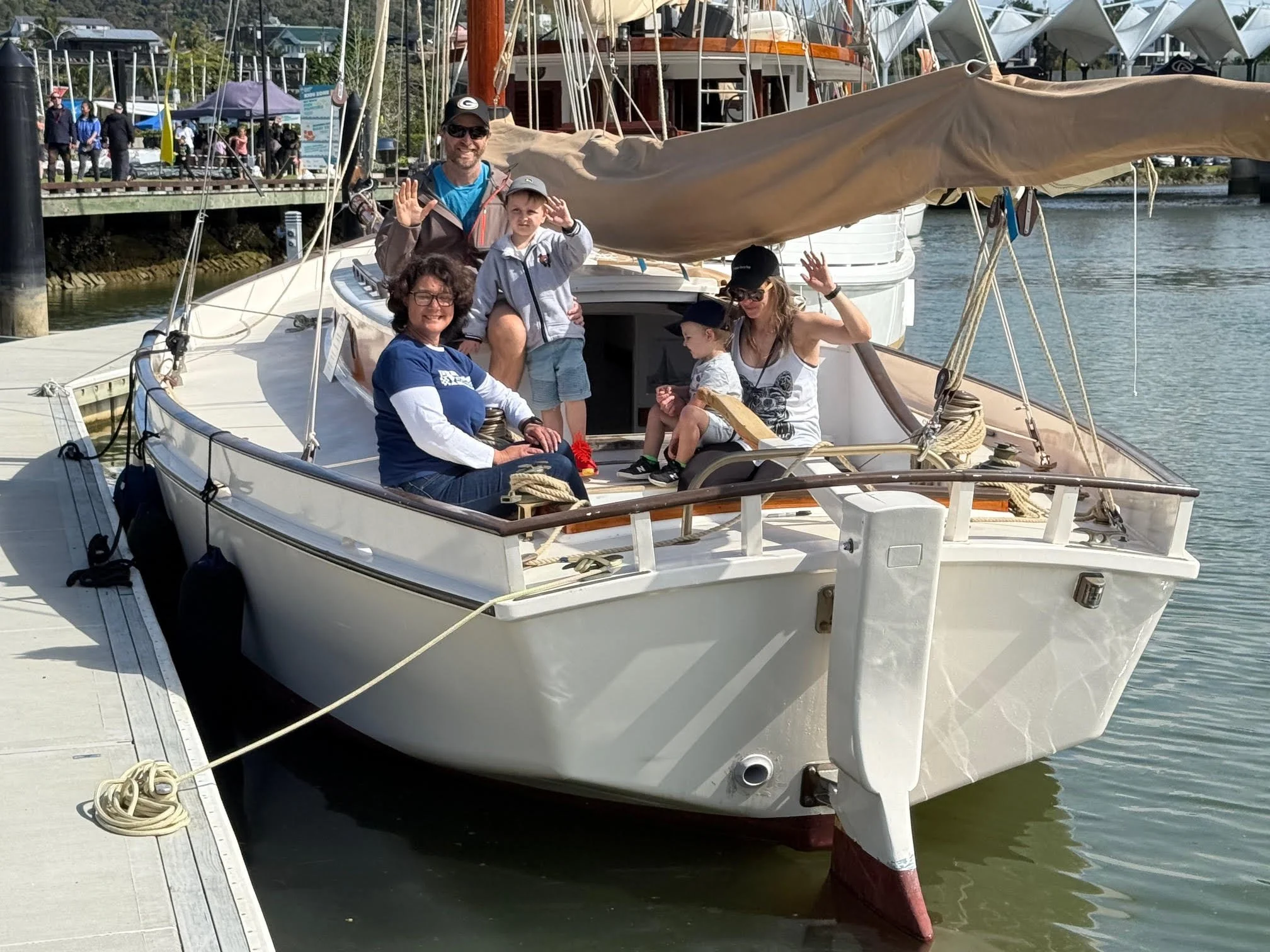
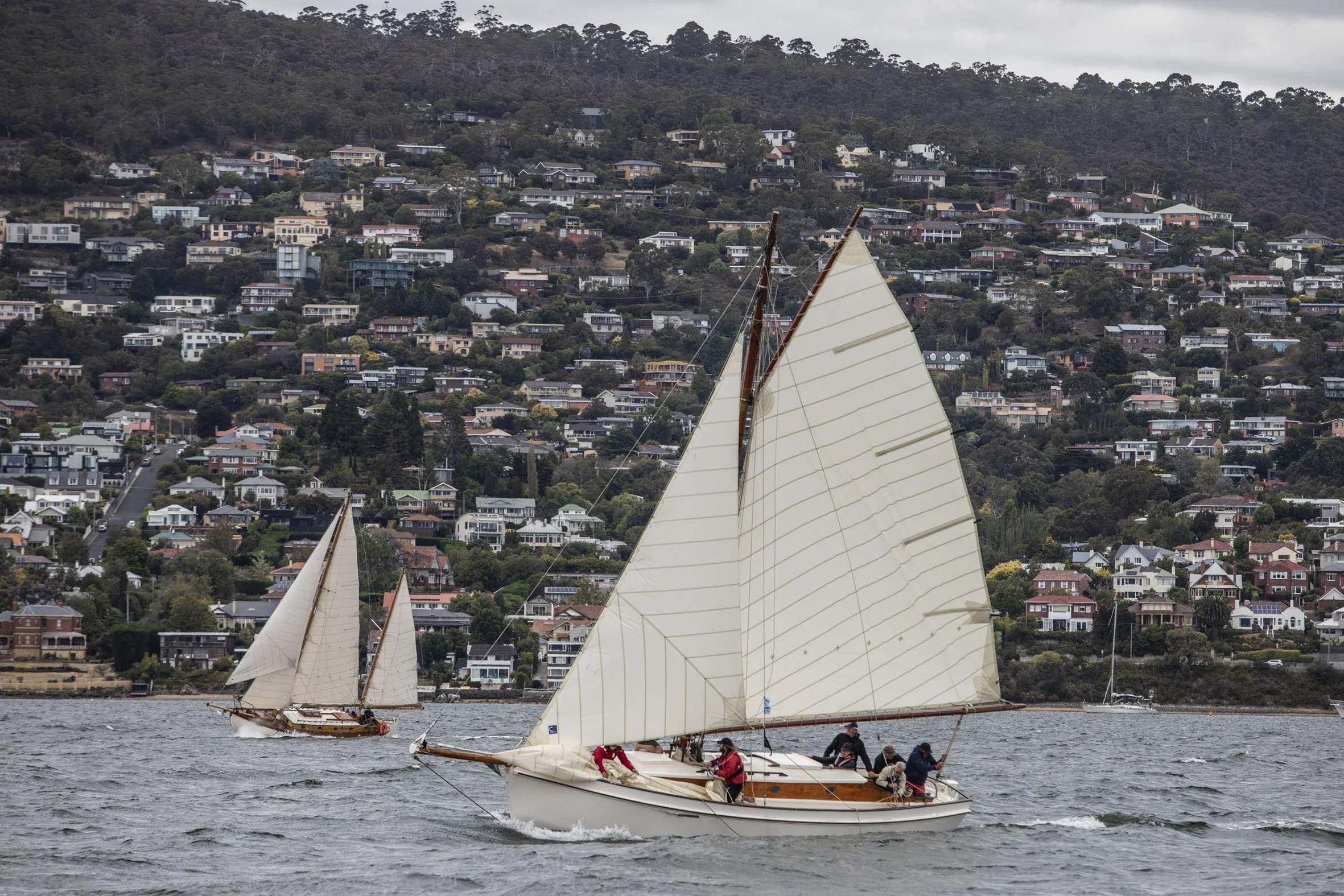
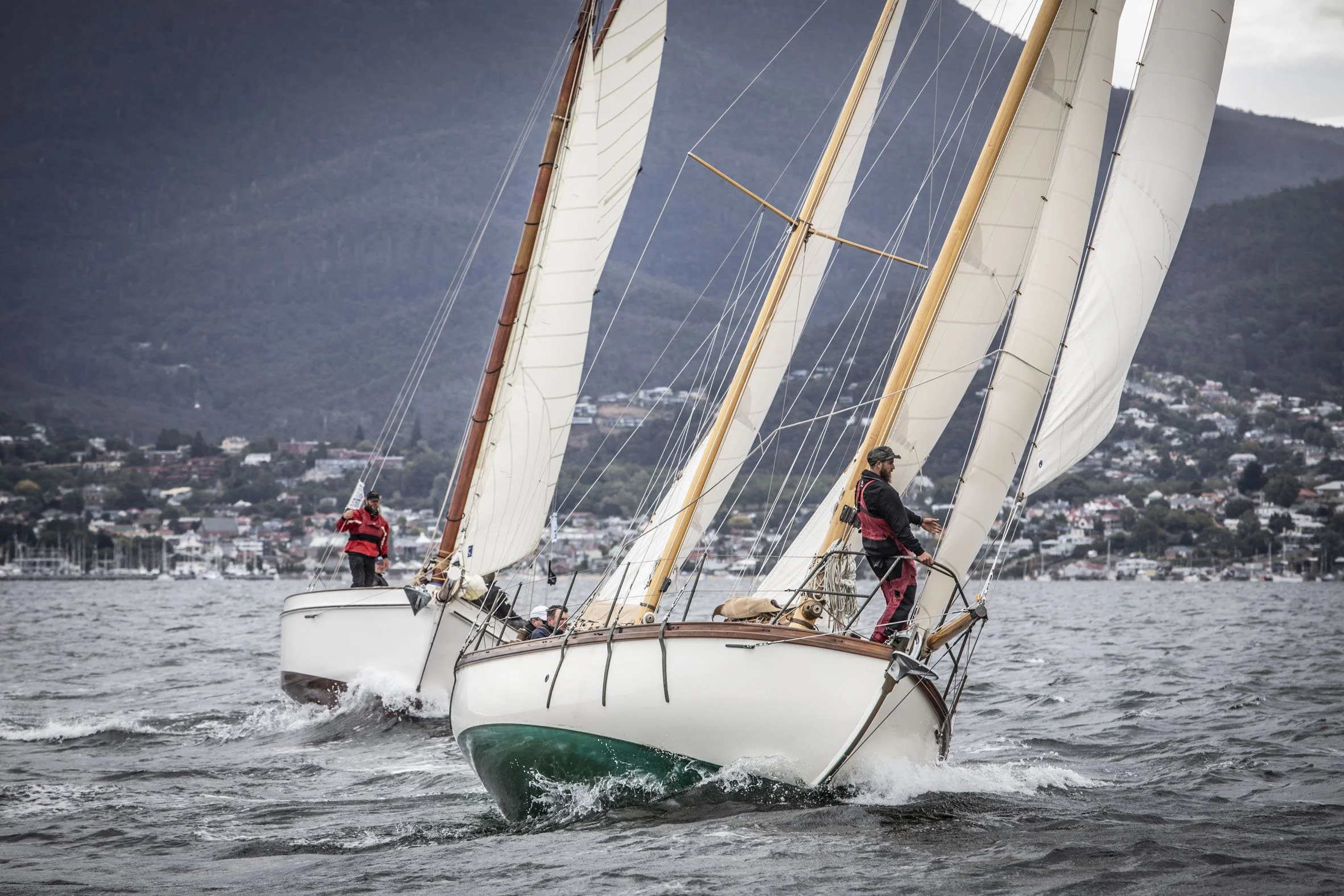
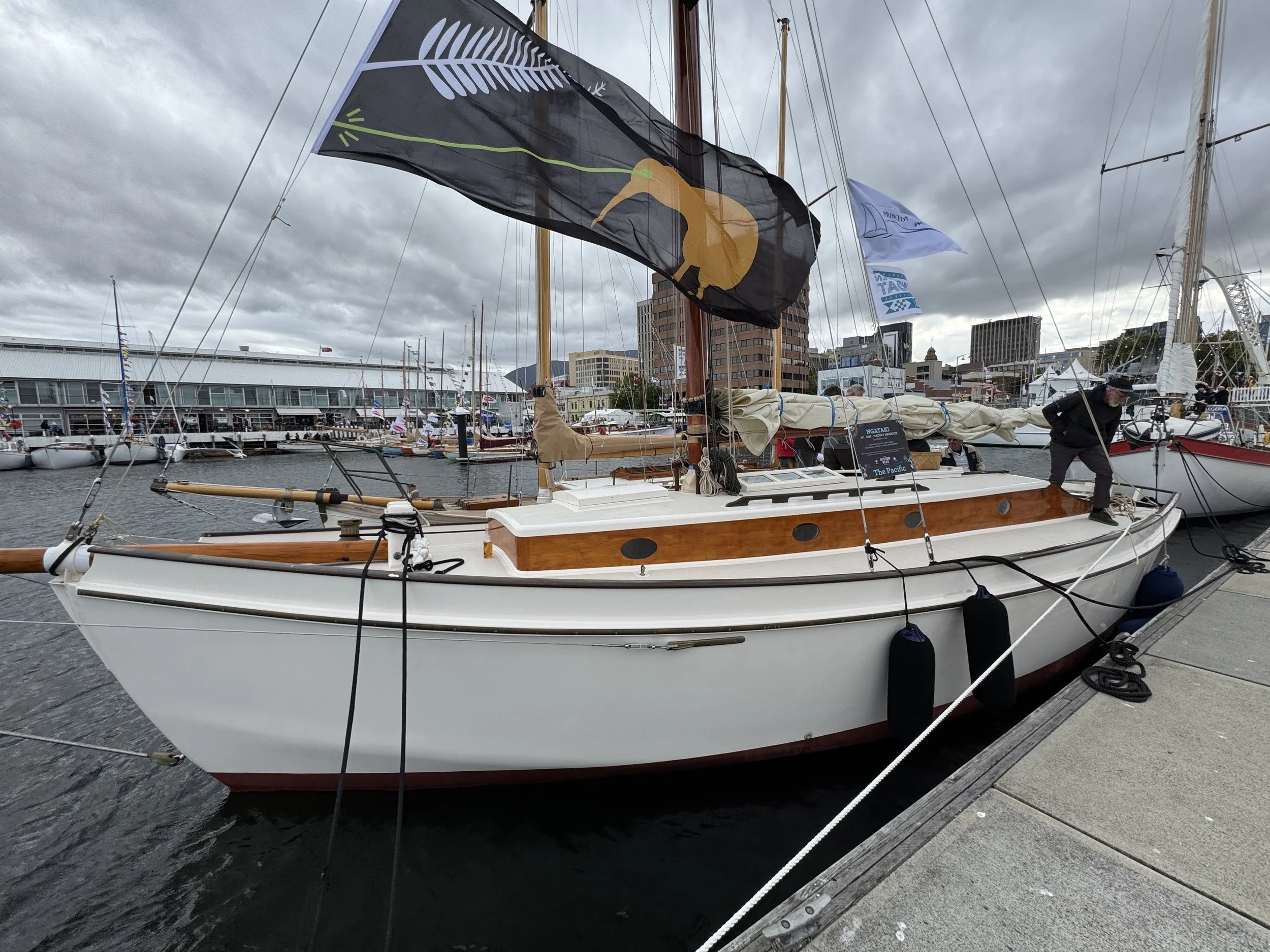
Ngataki out and about in the last year: photos / Mark Chew, Southern World Sailing, and Tino Rawa Trust