
The Life & Times of Vega - Small Boat; Big Heart
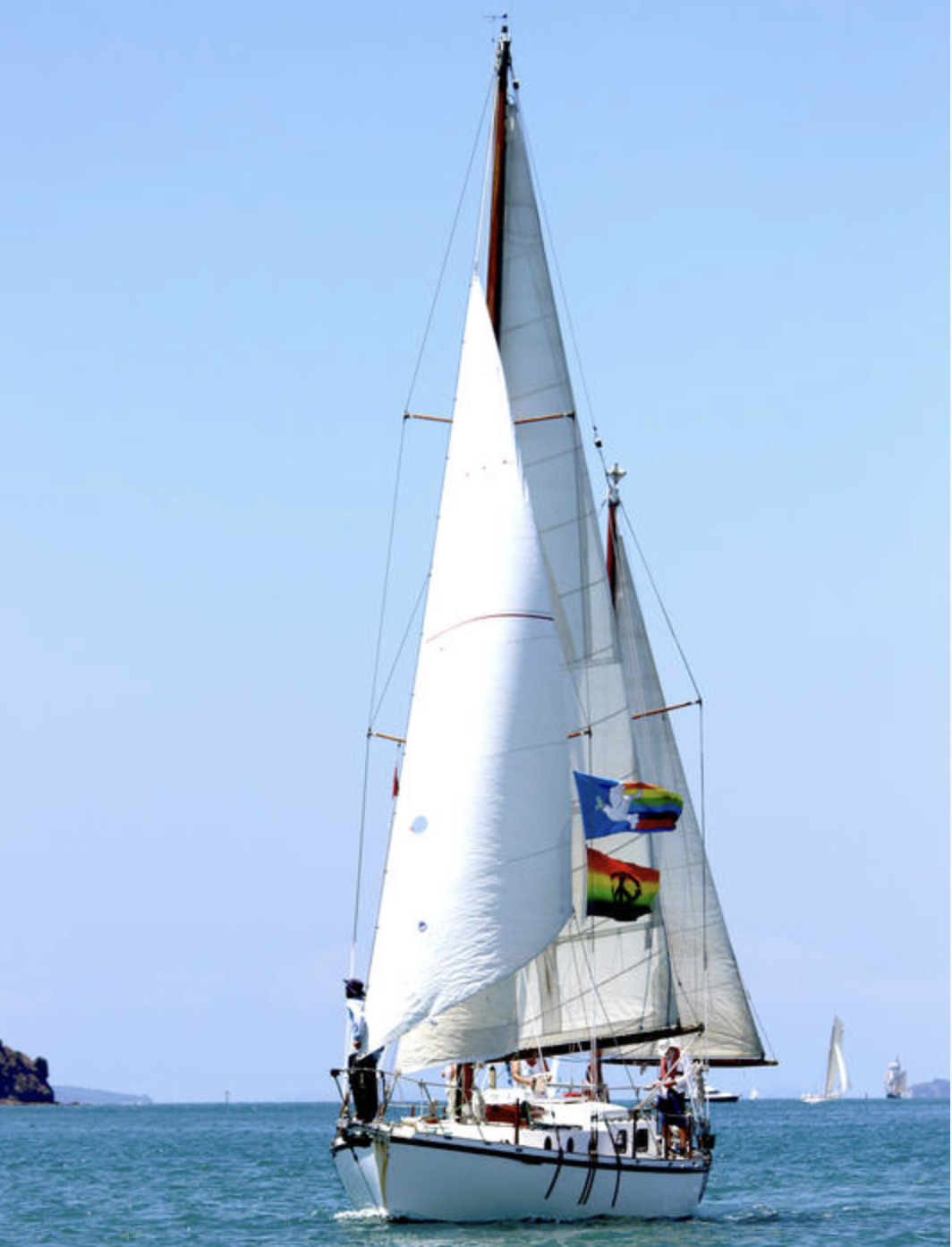
Photo / Lyn Bergquist, NZ Maritime Museum Collection
This 80-year old boat has been places and seen things that very few wooden boats have seen as it took centre stage in our country’s activism story helping to campaign against nuclear testing, whaling, and much more.
It was 1946. On a Whangārei beach in Te Tai Tokerau, Alan Orams began building a boat using hand tools and kauri (for planking); kowhai and tanekaha (for ribs); and matai (for bulkheads, cabin, and decking). SV Vegalaunched in 1949. Although only an unassuming 43-footer, over 50 years of campaigning—often for Greenpeace as the vessel Greenpeace III—the ketch and its various crew have proved to be leviathans.
Vega first wore its heart on its sleeve in 1972, when its then Canadian owner David McTaggart sailed to Mururoa in the Tuamotu Archipleago to protest the French government’s testing of nuclear weapons. A year later, in the same spot, going about its same business, Vega was rammed by the French Navy. McTaggart and other crew were beaten by commandos.
Then, it was onto chasing Russian whaling fleets; bothering container ships transporting yellowcake uranium out of Darwin; joining protesters in Washington State to halt production of the wood treatment chemical pentachlorophenol; disrupting the progress of American warships and submarines in numerous harbours; working Greek speedboat operators into a frenzy in defence of turtles; shepherding scientists around as they monitor the impacts on whales and dolphins of seismic testing carried out by oil companies, which blast the seafloor with high-pressure guns to map reserves in the Reinga Basin northwest of New Zealand.
Vega last flexed—or tried to—its campaigning muscles in 2022, intending to join a Ukraine Peace Flotilla before machinery packed up, forcing the boat to remain in its home berth here, around the corner and down the pontoon.
Supplied by the NZ Maritime Museum