Reflections on our traditional heritage
This story was written by Ivor Wilkins and originally published in Seahorse Magazine. It is reproduced with permission from the author.
Auckland’s inaugural Wooden Boat Festival last year dramatically underscored the level of public affection for and appreciation of the unique collection of heritage yachts and boats in their midst, from the aristocratic gaff-riggers of the A-division, down to beautifully restored or maintained clinker dinghies.
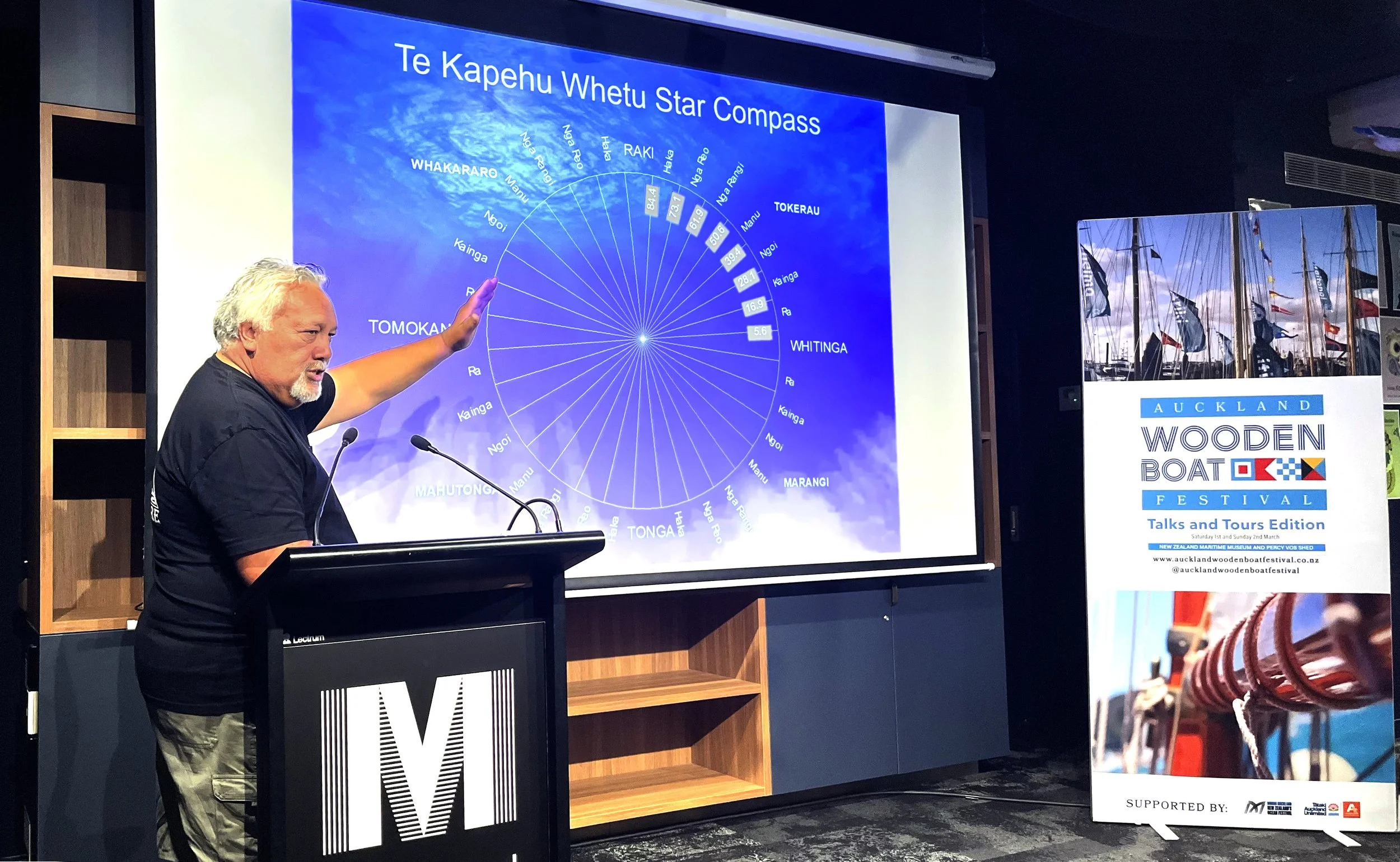
Stan Conrad describing the Star Compass at the 2025 Talks and Tours Edition
Thousands turned out to gaze upon the gleaming varnish and to celebrate the fact that these vessels, many dating back to the 19th century, are not simply well-preserved historical artefacts, resting on their considerable laurels. They remain active racers, out in all weathers and no quarter asked or given.
Taking place just months before Emirates Team New Zealand embarked on its Barcelona defence of the America’s Cup, the exhibition was a telling reminder that New Zealand’s international racing prowess originated in wood and canvas and developed over a 150-year continuum.
Under the direction of the indefatigable duo of Tony Stevenson and Michelle Khan of the Tino Rawa Trust and with support from the city and a number of other agencies, the event was a triumph of organisation against tight deadlines and budgets, with 160 vessels on display and more than 8,000 people attending.
On the back of this success, it was decided that this would become a regular event every second year, with a smaller-scale festival in the ‘off’ years comprising seminars and small displays – “Talks and Tours” – on a range of topics.
One such topic provided an opportunity to reflect that New Zealand’s wooden boat traditions are not confined to post-colonial European and American influences. Polynesian voyagers are reckoned to have arrived on these shores nearly 1,000 years ago.
Maori legends, ceremonies and songs celebrate the phenomenal achievements of these early seafarers. Many tribes trace their roots back to the arrival of specifically named voyaging canoes centuries before Europeans ventured to these parts.
While this is a source of great pride and cultural importance, the traditional boatbuilding and ocean navigating skills that enabled those early voyages came perilously close to being lost for ever.
By curious coincidence, in the mid-1980s – just when New Zealand yachting was forging its path ahead into the America’s Cup arena – a Maori initiative began reaching back into its past to recover those lost arts.
Those divergent paths symbolically reconverged in Barcelona last year. Every race day, Emirates Team New Zealand’s dockout was accompanied by a powerful Ngati Whatua Orakei launching ceremony, which drew huge public attention. That Maori connection has come to occupy a very significant position within the team culture.
Based on mutual respect, it derives at least in part from their shared maritime exploits, underscored by the revival of Maori traditional ocean voyaging expertise.
Delivering an address at the Talks and Tours edition of the Auckland Wooden Boat Festival in March, master navigator Stan Conrad gave a detailed presentation on the birth of the Maori voyaging renaissance.
It began when he was invited to join the Hawaiian double-hulled voyaging canoe, Hōkūleʻa, on a passage from Rarotonga to New Zealand in 1985. Another coincidence: Hōkūleʻa was built a decade earlier in response to a book written by New Zealander Andrew Sharp disparaging accounts of Polynesian voyaging skills. Sharp argued that Polynesian migrations occurred more by accident than design.
American anthropologist Dr Ben Finney was determined to prove Sharp wrong and, in 1976, under the auspices of the Polynesian Voyaging Society, Hōkūleʻa completed a 2,500-mile maiden expedition from Hawaii to Tahiti.
The voyage was navigated without any modern aids, relying entirely on Mau Piailug, a Micronesian grand master navigator using ancient observational skills.
In 1985, Hōkūleʻa embarked on a more ambitious Voyage of Rediscovery from Hawaii to New Zealand, via Tahiti and the Cook Islands. Part of the mission was to revitalise interest in Polynesian culture and traditional seafaring techniques along the way. Stan Conrad joined for the passage from Rarotonga to New Zealand.
A professional fisherman, Conrad grew up in the Far North of New Zealand close to the legendary Hek Busby, renowned for his skills in building traditional Maori war canoes. Conrad’s forebears on his European side were sea captains, while his Maori ancestors trace their roots back to the arrival in New Zealand of the earliest Polynesian canoes.
“On that voyage, I spent time listening and learning,” says Conrad. “I spent time with Dr Ben Finney, talking about traditional navigation and voyaging waka (canoes) and how extensive their journeys were. I was totally absorbed.”
Those on-board conversations raised his awareness of the extent of all the cultural and historical interconnections stretching across the Pacific between Polynesia, Micronesia, Melanesia and on to South East Asia as far as Taiwan. “They have similar names, similar stories, similar heritage.”
Under the tutelage of Mau Piailug, he also started his apprenticeship in traditional navigation.
Central to this is the Polynesian star compass. “This is a mental construct to help you memorise what you need to know to navigate,” according to Hawaiian Nainoa Thompson, who also studied under Mau Piailug, and captained the 1985 Hōkūleʻa Voyage of Rediscovery.
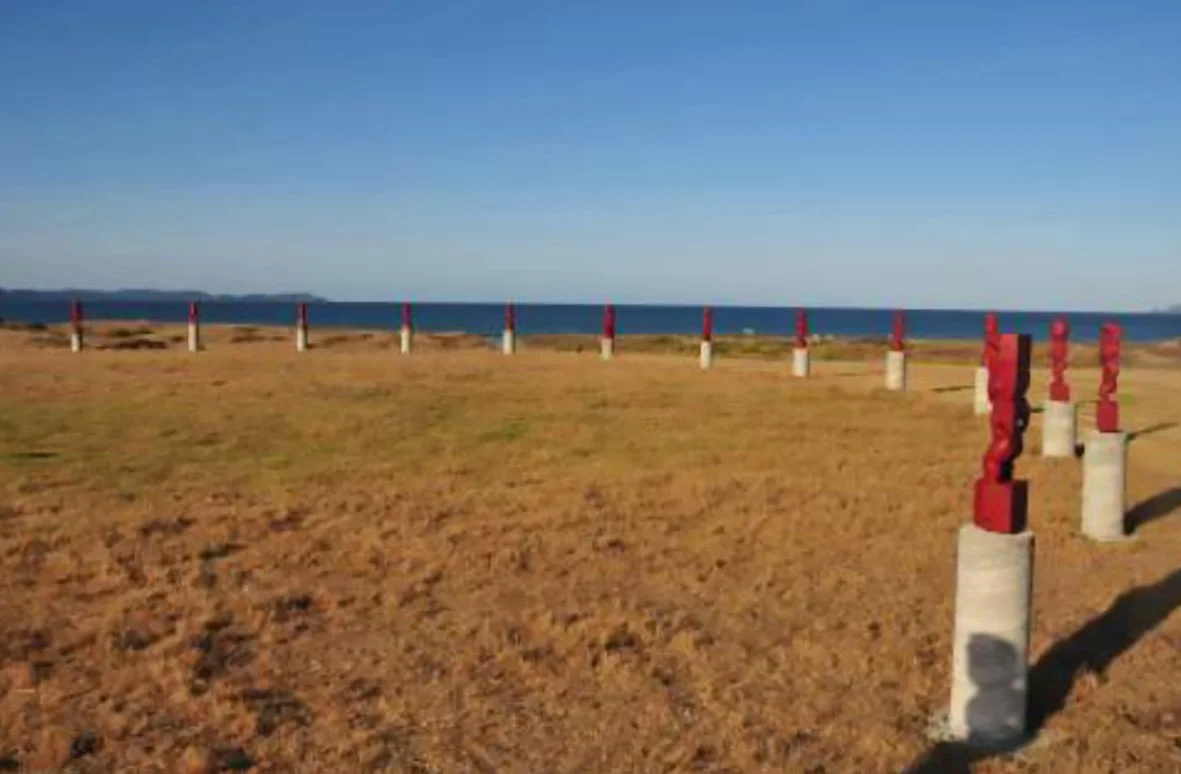
The Star Compass in the Far North / Photo Pacific Navigation School
“The star compass comprises a circle broken up into 32 points,” Conrad explains. “Each point is separated by 11.25°. If you multiply 32 by 11.25, you get 360°.” Each 11.25° wedge represents “a house” of memorised stars and constellations and where they rise and set over the ocean.
“The navigator doesn’t see himself as sailing to the islands,” says Conrad. “He sees himself as the centre of the compass and the destination islands rise out of the sea and come to him.”
The star compass is the central tool, but the navigators also draw on a hierarchy of observations: sun, moon, stars, winds, wave patterns, cloud formations, birds and whales. Also crucial to the calculations are the seasons, times of departure and, without electronics or magnetic compasses, gauging course and speed.
Climate change, pollution and over-fishing are blurring some aspects of these techniques. “The seasons and weather are no longer following the normal patterns,” Conrad laments. “And, because we move slowly across the ocean, we see the environmental impacts of pollution and over-fishing.”
Hōkūleʻa’s arrival in New Zealand in 1985 achieved its goal of inspiring local interest in traditional voyaging. The seafarers were welcomed ashore by respected Maori elder, Sir James Henare, who challenged local Maori to build their own “waka” and reawaken their voyaging skills.
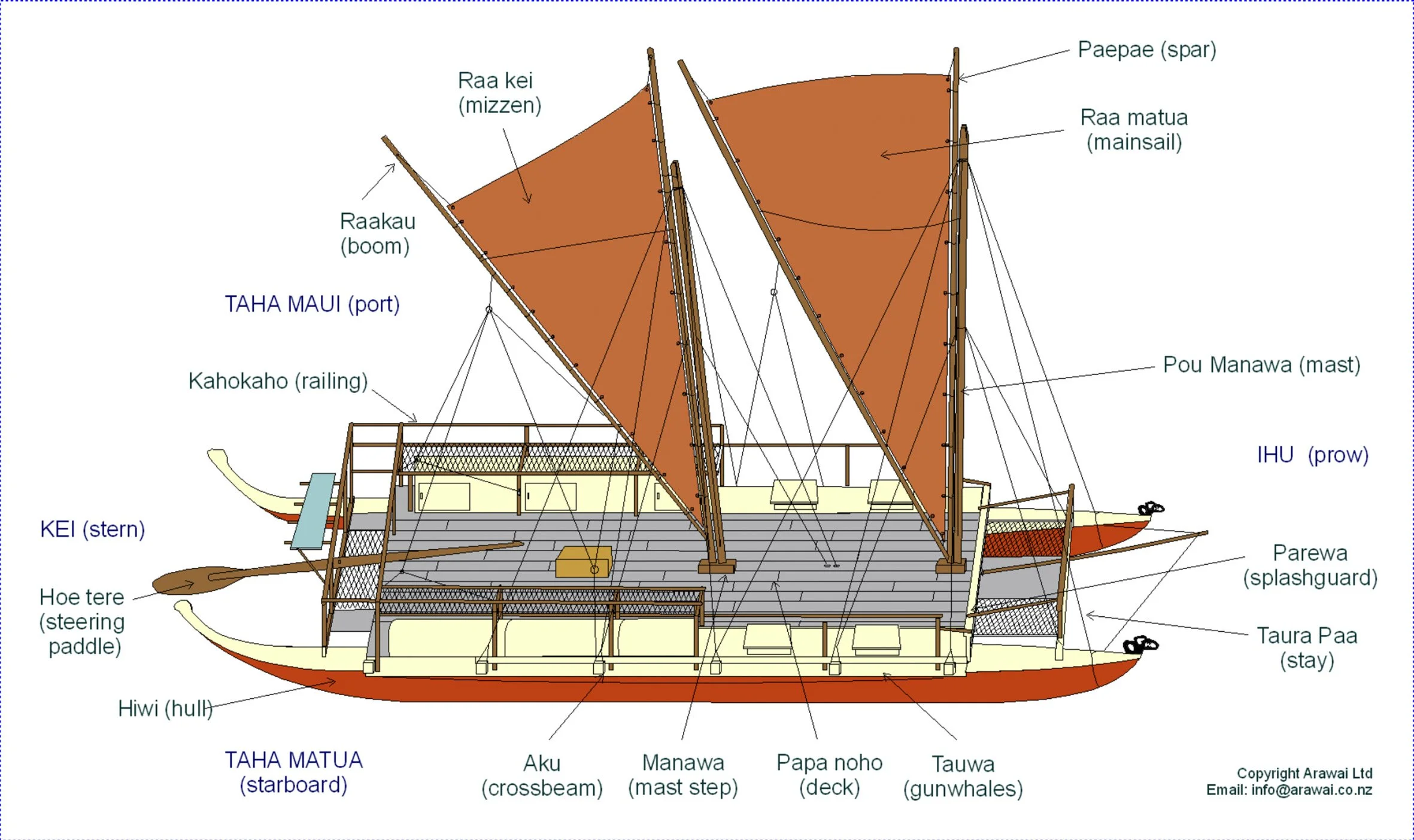
The waka
In response, Sir Hector “Hek” Busby (he was knighted in 2018 and died in 2019) felled two enormous trees and set about building his first double-hulled voyaging canoe. It was named Te Aurere in honour of Sir Hek’s local marae.
In 1992, with Hek Busby and Mau Piailug at his side, Stan Conrad captained Te Aurere’s maiden voyage from New Zealand to Rarotonga. “We were mostly young greenhorns,” he recalls. “It was a big learning, but the ocean schooled us well. We got a good hiding out there, but we made it and reopened the path of our ancestors’ voyages out from New Zealand on return routes across the Pacific.”
That was followed in 1995 with a voyage to Hawaii and back and in 2012, a new young navigator, Piripi Smith, was given the responsibility of guiding Te Aurere and a second canoe from New Zealand to Easter Island.
After many weeks at sea, Conrad and Busby watched with pride as Smith halted the two canoes before dawn while he peered forward, straining to distinguish whether the vague shape on the horizon was a cloud or land. At last, having confirmed the memorised features of the remote island, he declared they had arrived.
“It was like finding a needle in a haystack,” says Conrad. “If you miss Easter Island, you may as well carry on to South America.”
The Easter Island voyage meant Te Aurere had completed the Polynesian triangle encompassing New Zealand, Hawaii and Easter Island. The triangle covers an area of approximately 7.75 million nm2 and Conrad says the traditional navigation systems would enable voyagers to locate “every dot within it”.
The success of the Easter Island expedition meant the precious skills passed on by grand master Mau Piailug to Stan Conrad, Jacko Thatcher, Sir Hek Busby and a number of others had transferred to a new generation. “Now we have some amazing young leaders and navigators who can voyage across the ocean,” says Conrad.
To ensure this knowledge continues to be nurtured into the future, a school has been established in the remote Aurere Beach settlement where Sir Hek Busby crafted 26 significant waka.
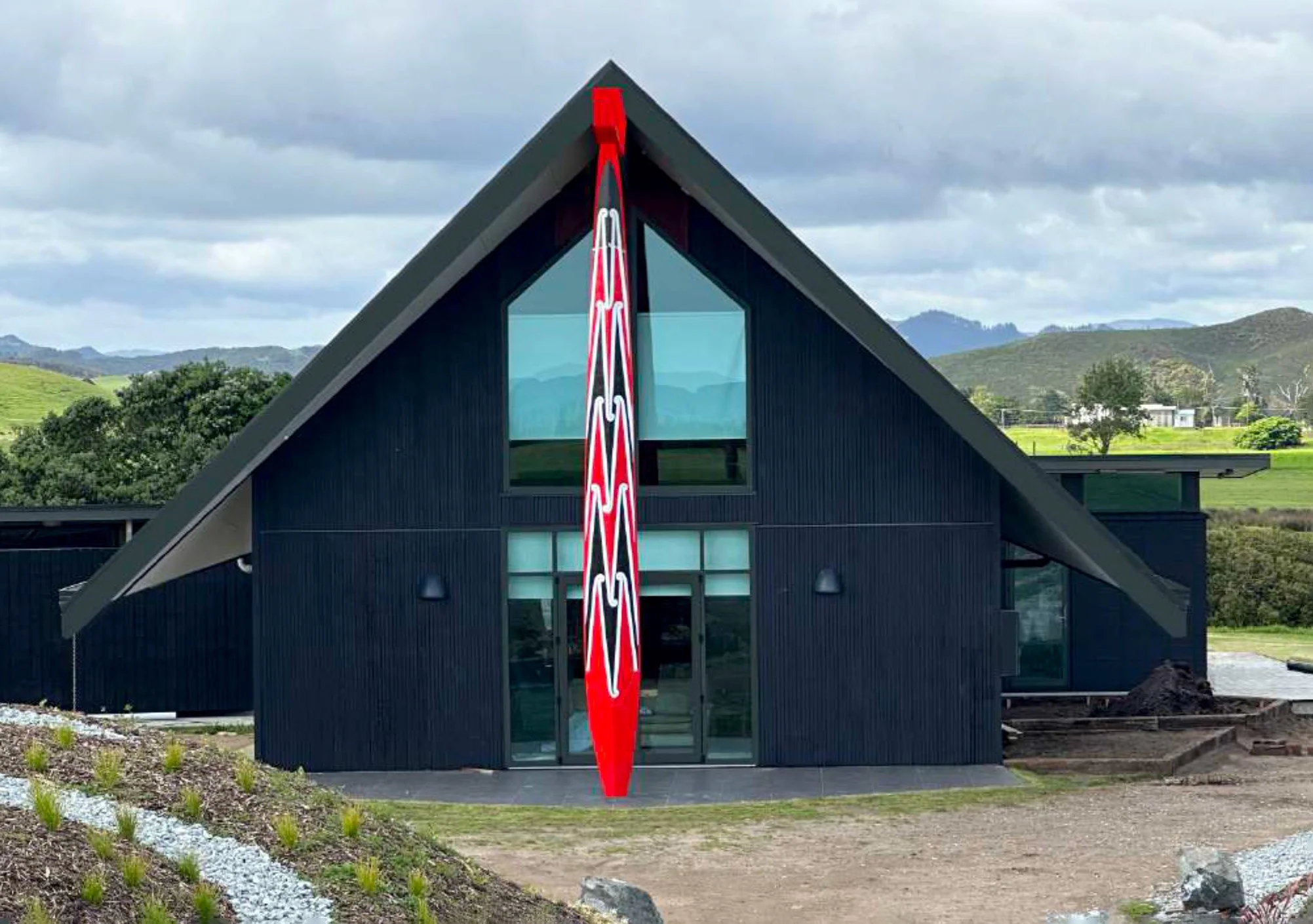
The Hek Busby Navigation School
A documentary movie, Whetu Marama: Bright Star, includes a delightful scene with Sir Hek’s great niece, Joelene Busby, at the centre of a large star compass marked out with carved statuettes on a flat piece of land near where Te Aurere was built. As she points at each marker, a group of young schoolchildren chants the names of the stars and constellations it represents.
It is living testimony that the traditional skills so nearly lost will be safeguarded into the future, fulfilling the injunction of the master navigators to “look after this knowledge, treat it with love, pass it on”.