
There are about a dozen communities left on earth where people in traditional craft still rely on their sails to carry out meaningful work.
They don’t do this for romantic reasons, but because they can’t afford a cheap diesel engine or the fuel to drive it. These working sailing fleets, that were originally responsible for binding humanity into a single ecological and historical system, have, almost by accident, become the last bastion of a disappearing tradition that globalised the human story.
One such community is the Dhow sailors of the East African Coast.
Mark Chew, was born in Kenya, and returns there every year working as a photographer in the refugee camps and slums of the region for development and aid agencies. He also regularly visits the Indian Ocean coast line, making friends with local sailors, sailing on their boats and trying to understand the history, construction and function of these ancient, magnificent lateen rigged craft.
The “Disappearing Dhows” exhibition is a contemporary photographic record of the sailing craft in this part of the world, documenting their construction, their function, their culture, and the people who sail them.
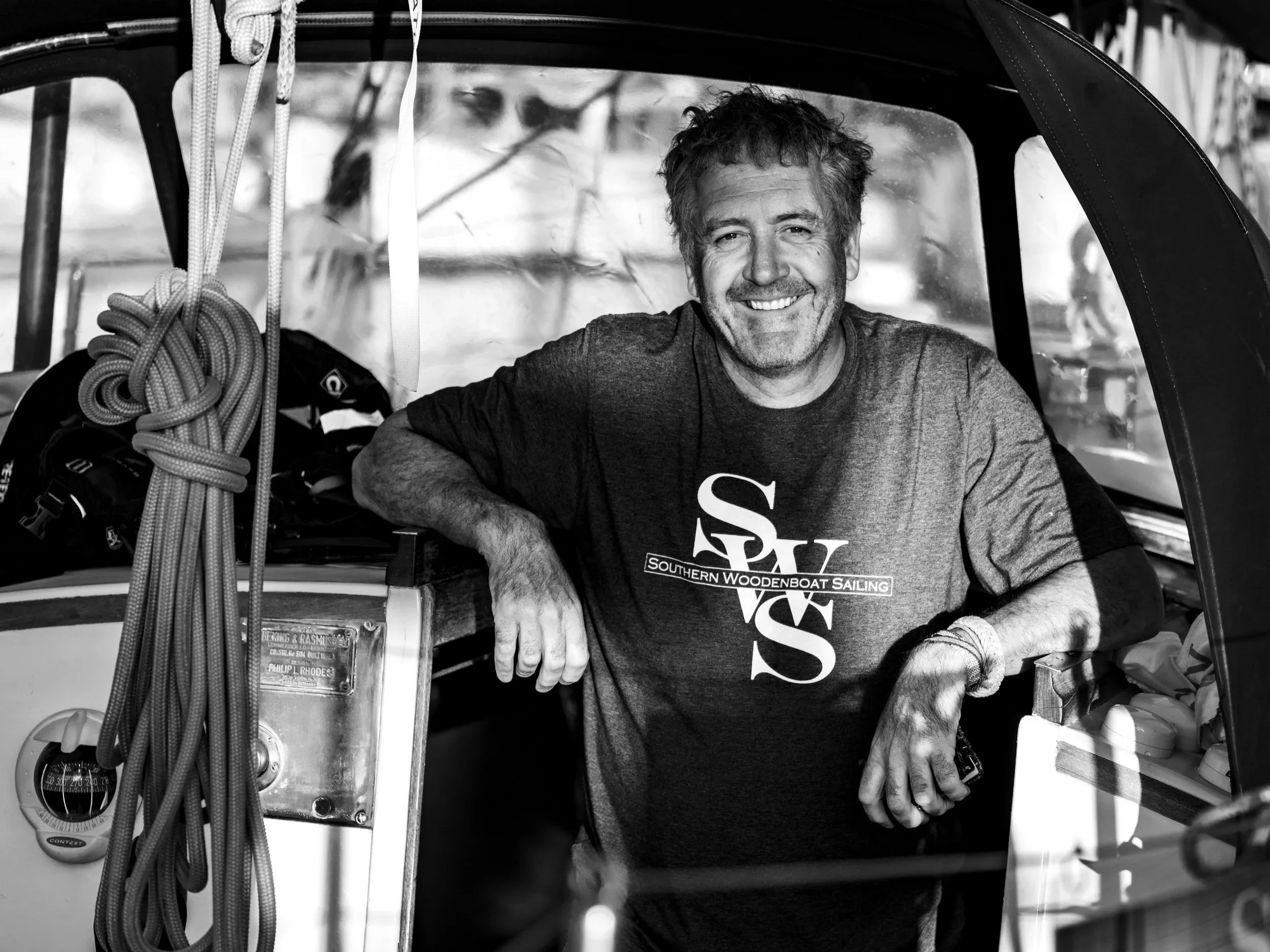
Mark Chew is a working photographer who, with his wife Sal, lives aboard their 48 year old S&S Swan MATILDA currently based in Valencia, Spain.
His photography centres around development, aid and education projects in East Africa, South East Asia, the Pacific and Australia.
When not taking photographs Mark spends his time sailing and promoting the values of traditional boat custodianship, via his online magazine, www.southernwoodenboatsailing.com which now reaches 25,000 people every month. In addition to SWS, Mark is an active board member of the Australian Wooden Boat Festival and a much valued supporter of the Auckland Wooden Boat Festival.